Pages

Labels

Thursday, 19 January 2012

iNature biodegradable iPhone case

Your iPhone won't last forever. In fact, long before it wears out, chances are that you'll trade up to a higher model. The designers at Italian companies Med Computer and Biomood apparently figured that if the cover that you're using on that phone is bound to become obsolete anyway, why should it last forever? The result is the 100-percent biodegradable iNature soft iPhone cover.
The iNature cover is made from an Italian bio-plastic known as Apinat. According to its makers, the cover snugly fits an iPhone - protecting it against bumps and falls - yet it also won't deteriorate or deform with use, or when subjected to wet environments. It is said to remain straight and rigid along the edges of the display, and incorporates openings to access the phone's various ports and other features.
When it comes time to get rid of the iNature cover, it must be placed in a composting environment. Once there, it should biodegrade by over 90 percent within less than 180 days.
We saw the iNature cover for ourselves last week at the Consumer Electronics Show, where it was named as an honoree in the CES Innovations 2012 Design and Engineering Awards. On display with it was the iNature BioRolly, a biodegradable device for wrapping up loose device cables such as headphone cords.
The iNature phone cover is available in several colors and three models, to fit iPhones 3G, 3GS, 4 and 4S. It can be purchased from the product website, for US$19.90. The BioRolly will set you back $7.95.


New hormone mimics the effects of physical exercise

A group of researchers at Dana-Farber Cancer Institute and Harvard Medical School, led by Bruce Spiegelman and Pontus Boström, have discovered a hormone that mimics some of the results of a workout by facilitating the transformation of white fat into brown fat. While the purpose of the former is to accumulate excess calories, the latter is used to produce heat. Irisin, named after the Greek goddess Iris, could one day help address obesity and diabetes. However, there is still a long way to go before the hormone is made into an actual drug.
Irisin occurs naturally both in humans and in mice, and its levels surge with physical exercise. Mice have to spend three weeks running on a wheel for the hormone to accumulate in their blood. For humans, the same happens after ten weeks of systematic exercising. A placebo-controlled study showed that boosting the levels of the hormone artificially in mice may induce some of the benefits that would normally be caused by a workout. The cells of the mice injected with irisin needed more oxygen and burned more calories. Obese mice lost several grams within the first ten days from the injection.
The treatment also had a positive effect on the regulation of blood sugar levels, which links the hormone to diabetes prevention. What's more, Spiegelman's team plans to investigate the potential of irisin to advance the treatment of diseases such as muscular dystrophy and muscle wasting. "We are hopeful, though we have no evidence, that this hormone may embody some of the other benefits of exercise, perhaps in the neuromuscular system," he says.
This sounds very promising, but there is still a lot to be done before an irisin-based drug comes to a pharmacy near you. First, whether or not irisin will have the same beneficial effects on humans still remains to be seen. Second, making it into an actual drug may turn out to be very challenging, as pointed out by MIT professor Harvay Lodish. Adiponectin, a hormone Lodish discovered back in the early 1990s, also seems to play a role in staving off obesity and diabetes. It is correlated with the body mass index (BMI) and it increases the metabolic rate in mice without raising the food intake. Still, so far all the attempts at converting the full size adiponectin protein into a viable drug have failed.
Professor Spiegelman, however, is optimistic. In fact, he's optimistic enough to have set up a separate company, called Ember Therapeutics, to conduct brown fat-related research that includes studies on the effects of irisin. Supported by Third Rock Ventures, the company raised US$34 million in the first round of financing. We do hope that all this money and brain power will eventually lead to a treatment for obesity and diabetes. That said, we do recognize that there might be more to it than just swallowing a pill.
We are far from advocating the medicalization of serious social issues, and we warmly encourage our readers to exercise on a regular basis (at least until the magic pill is out, that is).


Magura releases hydraulic rim brakes for road bikes

When most people think of hydraulic brakes on bicycles, they probably picture modern mountain bikes with disc brakes. As early as 1987, however, German bicycle component manufacturer Magura was making hydraulic rim brakes for mountain bikes. These featured the arms and rubber pads that we currently associate with V-brakes and cantilevers, but they were hydraulically activated. Now, 25 years later, Magura has released an aerodynamic hydraulic rim brake system for lightweight time trial and triathlon bikes.
The new system is called RT8 TT - RT for Road Team, and TT for Time Trial.
In order to get the aerodynamics just right, Magura collaborated with Cervélo, the Canadian high-end road bike manufacturer. Cervélo is known for its research into bicycle streamlining, and in fact recently unveiled what it claims is the world's most aerodynamic time trial/triathlon bicycle, the P5 ... which has integrated RT8 TT brakes.
The system consists of carbon fiber levers, joined by sealed-system hoses to "extremely stiff" aluminum brake bodies. Flowing through those hoses is Magura's wonderfully-named Royal Blood mineral oil. Unlike the DOT braking fluid used in many mountain bike systems, it apparently doesn't need to changed, and is non-toxic. Like those other systems, however, RT8 TT is said to be essentially maintence-free and impervious to dirt, dust and water. The pads will still need to be changed, but this is a relatively simple procedure.
Low maintenance is nice, but according to Magura, the big selling features of RT8 TT are its high braking power, fine modulation, light weight and aerodynamics. Friction losses are reportedly minimal, meaning that even a slight touch of the levers will activate the bodies. Weight-wise, the entire system tips the scales at 495 grams. For comparison, a complete Shimano Dura-Ace TT/TRI cable-activated brakeset is 381 grams, not including cables and housings.
The Cervélo P5 will be the only bike to feature RT8 TT for the 2012 racing season, but it should be available for use on other makes of bicycles after that. Deep-pocketed cyclists can purchase the system on its own as of this June, for EUR 599 (US$770). For EUR 499 ($642), they can instead go with the aluminum-levered RT6 TT system. In the near future, Magura will additionally be introducing the RT8 mechanical-to-hydraulic converter, for installing the hydraulic brakes on bikes with existing mechanical levers. A cheaper RT6 converter is also on the way.


New gallstone-removing endoscope promises fewer gallbladder removals

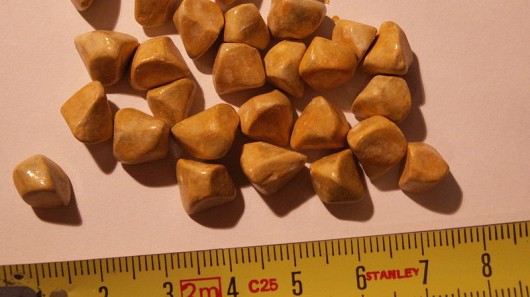
When someone has gallstones, treatment typically involves the removal of their gallbladder. This is usually done laparoscopically, in a procedure known as a cholecystectomy. A group of scientists from the Second People's Hospital of Panyu District and Central South University in China, however, have created an endoscope that they say is able to locate and remove gallstones while leaving the gallbladder intact.
The device has an ultrasonic probe at its tip, that is used to locate the stones. It can reportedly even find small ones, embedded in the lining of the gallbladder. While it isn't entirely clear how the endoscope deals with larger stones (one would assume it blasts them apart), it is able to suck up fine, "sludge-like" stones using its horn-shaped "absorbing box."
Should laparoscopic surgery be necessary, an integrated fluid channel can also be used to inject water into the gallbladder, to increase the size of its interior cavity. The device has standard interfacing hardware, so it can be connected to typical camera systems worldwide.
In clinical trials conducted at two hospitals, there was found to be little difference in the surgical safety of the new endoscope, and one commonly used for cholecystectomies. Additionally, its flexibility, reliability and image quality were reported to be better.


GM’s Windows of Opportunity project turns car windows into interactive displays

In-car DVD players and handheld game consoles have proven a godsend to parents looking to avoid the regular cries of "are we there yet?" from kids in the back seat. Similar to Toyota's "Window to the World" concept, GM's "Windows of Opportunity" (WOO) project looks to advance back seat entertainment even further. The project saw the automaker giving researchers and students from the FUTURE LAB at Bezalel Academy of Art and Design in Israel free reign to design applications that rear seat passengers would interact with through their side windows, which act as interactive displays.
To inspire the students and let their creative juices run free when creating their applications, GM made it clear that it didn't have any immediate plans to put interactive display windows into production vehicles. However, the company said if they were to be put into production, they would likely use electronically charged "smart glass" technology, which can reflect projected images and is capable of variable translucence and transparency.
To demonstrate their applications, the students produced a full-scale functional prototype of a rear passenger seat and side window. The window was given multi-touch and gesture sensing capabilities using motion and optical sensor technology developed by interactive media display company EyeClick.

Otto:

Here's a selection of the apps the students came up with:
Features an animated character that is projected over passing scenery that responds to the car's speed, the weather and the landscape in real time.

Foofu:

Essentially an update of an old favorite with passengers able to draw on colored window condensation.

Spindow:

Literally provides a window to the world by letting passengers select a location on an interactive globe and projecting images from other user's windows at that location in real time.

Pond:

Lets passengers stream and share music with other cars on the road, download tracks, and display messages written on the window with passengers in other cars.
"Traditionally, the use of interactive displays in cars has been limited to the driver and front passenger, but we see an opportunity to provide a technology interface designed specifically for rear seat passengers," said Tom Seder, GM R&D lab group manager for human-machine interface. "Advanced windows that are capable of responding to vehicle speed and location could augment real world views with interactive enhancements to provide entertainment and educational value."
Whether any of the applications ever actually make it into production vehicles remains to be seen, but GM 's Omer Tsimhoni says such projects are invaluable as working with outside designers "brings fresh perspective to vehicle development. WOO is just one of many projects underway at GM that could reinvent the passenger experience in years to come."


Optimus Pad LTE becomes LG’s first LTE-capable tablet

Since the release of the G-Slate and Optimus Pad last year, tablet offerings from LG have been pretty thin on the ground. Now the company has announced it will be releasing its first LTE-capable tablet in its homeland next week. The Optimus Pad LTE is powered by a Qualcomm 1.5 GHz dual-core processor and comes running Android 3.2 (Honeycomb). It also features the same True HD IPS technology that debuted on LG's Optimus LTE smartphone but with the 1280 x 720 pixel resolution now spread over 8.9-inches worth of display.
In announcing the new LTE tablet, LG claims that tablets generate five times more traffic than the average smartphone, so tablet users will likely appreciate LTE's faster connectivity. In addition to being the company's first LTE-capable tablet, LG claims the Optimus Pad LTE is also the first tablet in the world to support micro SD memory cards of up to 32 GB. This is on top of the 32 GB of onboard memory already included in the device.
Other specs include an 8-megapixel rear-facing camera for shooting HD video, and a front-facing 2-megapixel camera for video calls. It also features HDMI and DLNA connectivity and is powered by a 6,800 mAh battery. The unit measures 245 x 151.4 x 9.34 mm (9.64 x 5.96 x 0.36 in) and weighs 497 g (17.5 oz). It will be released in Korea next week priced at KRW880,000 (approx. US$774). Now word on plans for a wider release as yet.

Village Defense reinvents Neighborhood Watch with real time communication

If you've ever lived within the bounds of a Neighborhood Watch footprint, you have no doubt been astonished by the amount of crime in your community. Neighborhood Watch newsletters in most locales carry lists of burglaries and worse and their locations, all of which are in your neighborhood. For centuries it seems, our lack of ability to coordinate and distribute that information has hampered the reduction of crime.
Neighborhood Watch was revolutionary and through its newsletters, brought a much higher awareness of crime in the community, even if people heard after the event, it was better than not hearing at all.
Real time communication, in the context of combating neighborhood crime, is a game changer and may yet turnout to be quite significant in societal terms. Man has gathered together in communities for protection for 10,000 years, yet despite the recent proliferation of neighborhood watch organizations, the protection afforded by a modern neighborhood is still modest.
Just as repressed communities around the globe are attempting to use social software to organise themselves, the implementation of social software to make communities safer seems like a significant leap forward in living standards.
Social software start-up Village Defense has created software that links neighbours to form a real-time communication system - one phone call notifies all neighbors (by text or phone) when a crime or suspicious activity is in progress. In the first pilot study of the new system, the increased awareness, greater availability of witnesses and shorter response times facilitated by Village Defense saw crime rates dropped 58% in the first year.


iConvert Scanner turns hard copies into digital documents on an iPad

While the promised paperless office has yet to eventuate, scanners are still a standard piece of equipment in most workplaces - even if that workplace happens to be the road. With many a road warrior these days packing an iPad in their arsenal, it's not surprising to see the release of the iConvert Scanner for iPad from Brookstone. After slotting an iPad (1 or 2) into the dock on the top of the device and starting the iConvert app, documents fed into the front feeder slot can be scanned and appear instantly on the iPad's display to be saved as JPEGs in the device's photo library.
The iConvert's feeder slot can take documents from 2 to 8.5 inches (5 to 21.6 cm) in width and scan them at up to 300 dpi resolution. Once the document has been saved to the iPad's photo library you can email, print or delete it, or edit it on one of the many image editing apps available from the App Store. As can be seen in the video below, the unit itself is compact enough to not take up too much room in a bag and appears to be battery-powered, which would make sense for a unit designed to be portable - although just how many scans yo'll get before needing a recharge remains to be seen. The iConvert app will be available as a free download from the App Store.